
Color Therapy Glasses for Dental Anxiety: What They Are and Why We Use Them
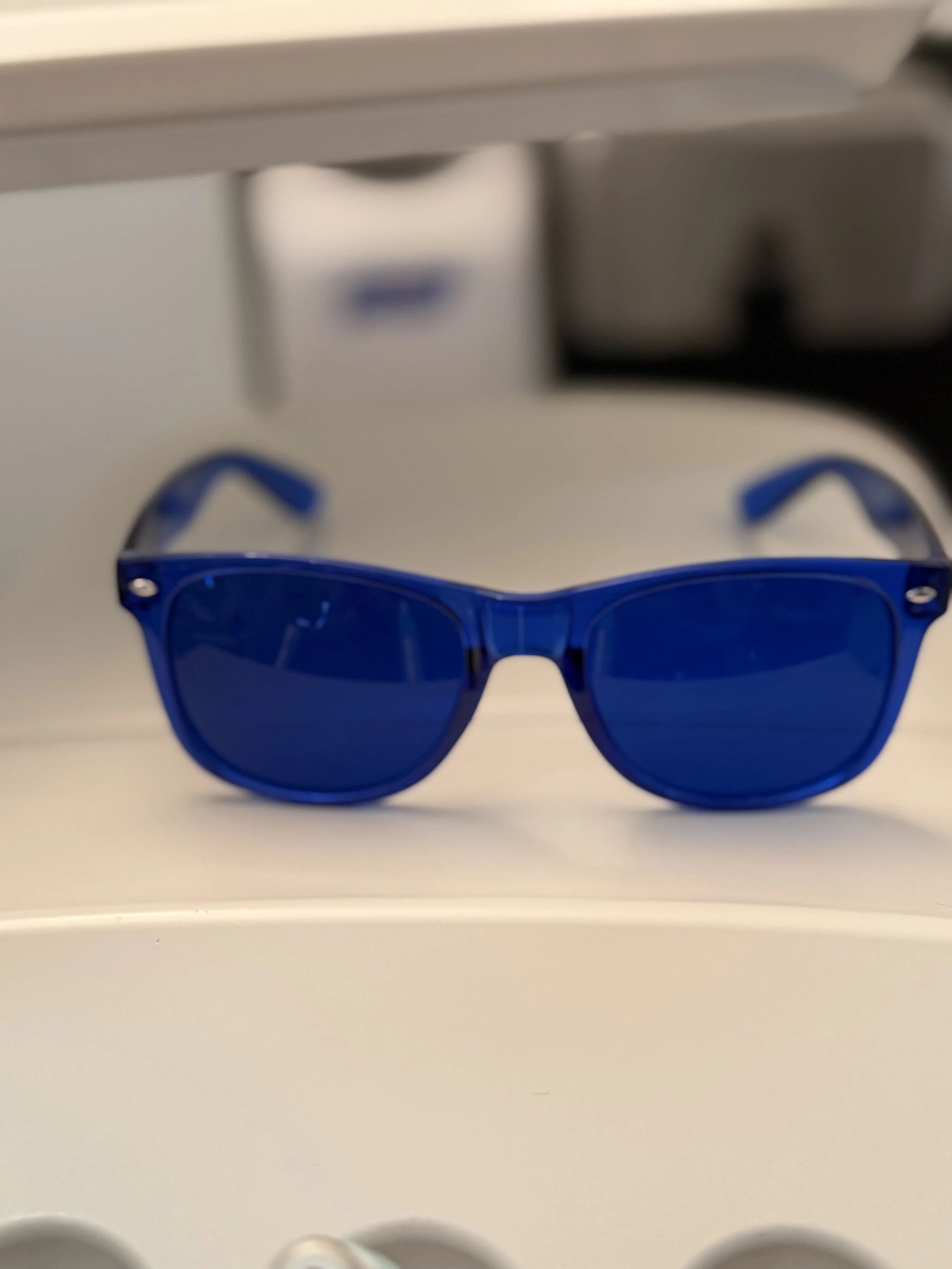
Color therapy glasses are soft, tinted lenses patients wear during dental treatment to block exam-light glare and create a calmer visual environment. They don't replace anesthesia or sedation, but they're a simple, no-cost comfort option offered to help ease dental anxiety — one of the most common reasons people delay dental care.
What Are Color Therapy Glasses?
Color therapy glasses are tinted eyewear — usually in blue, green, amber, or pink — worn during a dental procedure. They serve two functions:
Block glare from the overhead exam light
Create a calmer atmosphere
They're inspired by chromotherapy, a practice that uses colored light for relaxation, though the eye-shielding benefit is the part with the clearest, most practical payoff.
Why Do Dental Offices Use Color Therapy Glasses?
Dental anxiety affects a significant portion of adults, and it's a leading reason people avoid or delay checkups and treatment. Offices use color therapy glasses as one part of a broader anxiety-reduction approach, alongside:
Explaining each step before it happens
Adjusting pacing to the patient's comfort level
Frequently Asked Questions
Are color therapy glasses safe to wear during dental procedures? Yes. They're simply tinted lenses with no medical risk — similar to sunglasses.
Do color therapy glasses replace dental sedation? No. They're a comfort measure, not a form of anesthesia or sedation. Patients who need sedation should still discuss those options with their dentist.
What colors are typically offered? Most offices offer blue and green (often described as calming or cool) and amber or pink (often described as warm or cozy). Patients pick whichever feels best to them.
Do I have to pay extra for color therapy glasses at the dentist? At our practice, no — they're offered as a complimentary comfort option during your visit.
Ask About Them at Your Next Visit
If dental visits make you tense, ask us for a pair of color therapy glasses at your next appointment. It's a small, free addition that many patients say makes the chair feel a little less intimidating.